Many of us can either remember where we were on 9/11, 2001, or have read and heard about that horrific day. 9/11 left an impact on many of our lives. It prompted questions about our own safety, national security, foreign policy, and terrorism overall.
“Every generation gets a handful of days it can place. Where you were. Who you called. What you did next. For a lot of us, that day is September 11, 2001, and the hard part about a turning point is that remembering it is a choice. It does not happen on its own. It gets handed down on purpose, or it does not get handed down at all.” (Joseph Kopser, Co-founder, USTomorrow.us)
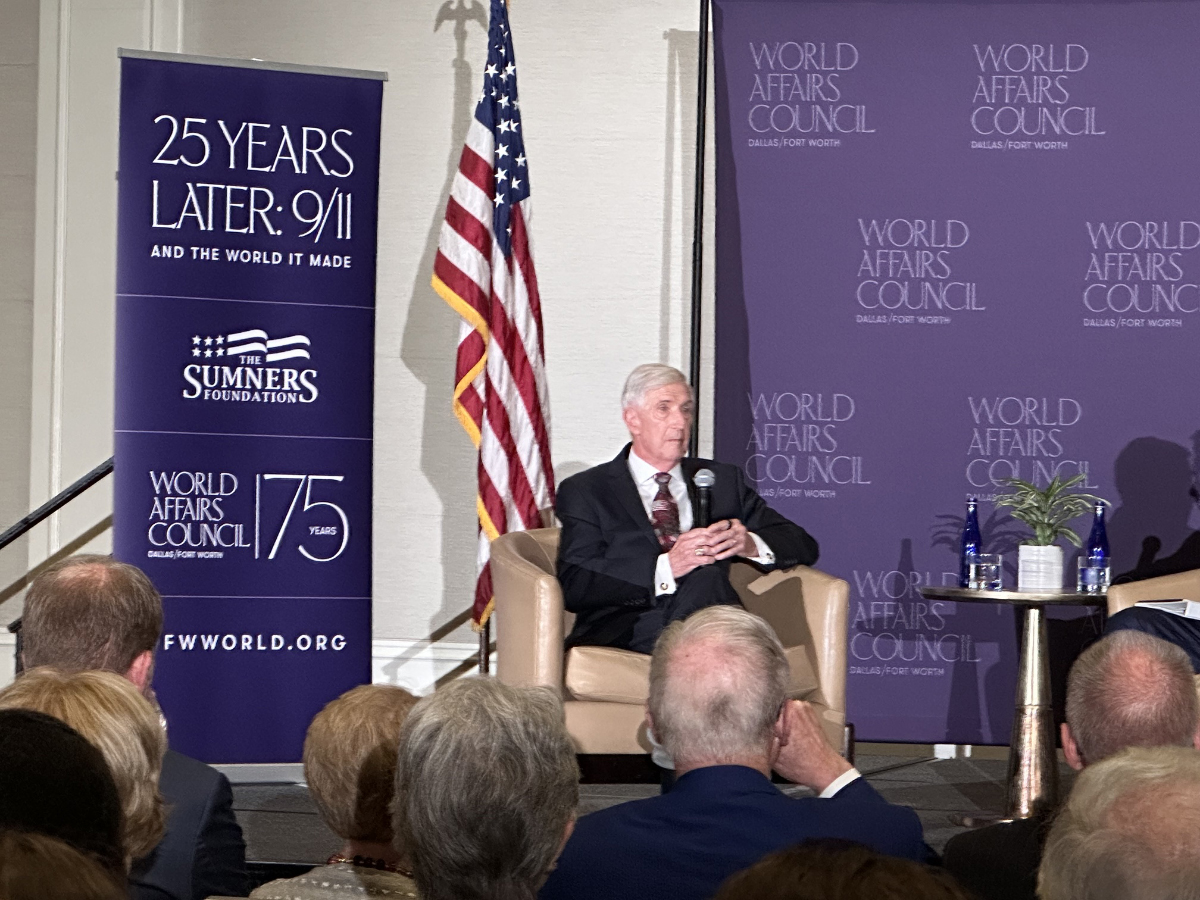
As Andrew Card, chief of staff for President George W. Bush, reminded us at a recent World Affairs Council, DFW, event, it was a day that will live on in memories as a day of infamy. “We have a responsibility to never forget.” There were many students in that room, and his words had a real impact.
Mr. Card was at President Bush’s side on September 11, when the President was talking to a class of 2nd graders in Sarasota, Florida. Card leaned over and whispered to the President that “a plane has hit the World Trade Center and America was under attack.”
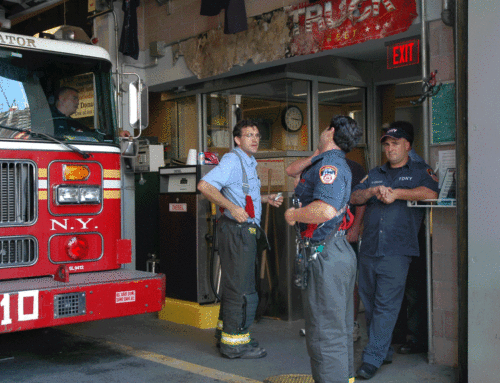
I was visiting my son and his family in Northern California. The phone awakened us. His Aunt Antoinette yelled, turn on the TV! We gathered around the set, horrified. We later learned several family members who were first responders were at the site of the WTC as it came apart.
Several days later, KERA asked us to produce a McCuistion TV program on what had happened and what was known at the time. Our host, Dennis McCuistion, was stranded elsewhere over 9/11, and had difficulty getting back to Dallas.
I scrambled, attending every police and official meeting I could to learn what led to this act of terrorism and who was behind it. That research led to the program, “Terrorism: Important Information You Haven’t Heard Yet,” which aired on KERA and other PBS stations later that month.
On the program, we focused on what America’s response should be to this horrific situation. We learned that a commission headed by Gary Hart and others had told Colin Powell and Donald Rumsfeld that terrorism was our biggest national security threat. The Commission’s conclusion was “that the United States today is very poorly organized to design and implement any kind of comprehensive strategy to protect the homeland.”
That TV program, which earned us a Telly award, was the beginning of a search for answers. Who were these terrorists that took over four commercial airplanes, sending two into New York City’s World Trade Center towers, and one into the Pentagon? And why did they attack us?
That TV program led to a grant from The Hatton W. Sumners Foundation to develop a documentary on 9/11 and the motives behind terrorist acts.
Onsite in the Middle East
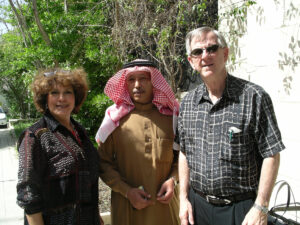
The search for answers led us, Dennis McCuistion, Phil Smith, and me, to Saudi Arabia, Iraq, Syria, Lebanon, Israel, and Palestine, so we could get a better sense of what led to 9/11. And learn the motivation behind terrorism in any form.
Our research led to a comprehensive documentary, The Roots of War, the Road to Peace, which was scheduled to air on KERA and other PBS stations in 2022. It did not. Two foreign terrorist organizations and transnational organizations protested its airing.
That didn’t stop us. Respectfully, but disturbed by its being protested, on my own, I went back to the Middle East several times. I made sure it was thoroughly vetted for accuracy by several American and Middle East scholars, and it finally aired in 2004.
That documentary, the research I undertook, the people I met, the stories I heard changed my life. And that’s another story….
PS:
“Twenty-five years after 9/11, it is an expanding threat, rather than a diminishing one, because of the multiplicity of ways things can be carried out,” former Police Commissioner Bill Bratton has said. “The good news is there’s a lot more tools with work with, but the bad news is [terrorists] also have access to those tools so it’s a constant one upmanship and who has the better technology to prevent it, detect it and to respond to it.”